Buffing a modern vehicle requires more than choosing a pad and polish. ADAS-safe car detailing means identifying cameras, radar and parking sensor areas before machine polishing, working with greater control around sensitive sections and treating paint protection film (PPF) differently from bare paint.
The right buffing pads, compounds and polishes give professional detailers more control, but knowing where and how to use them is just as important.
For professional detailers, body shops and dealership preparation teams across Perth and Western Australia, an ADAS-aware inspection should form part of the paint correction process as these systems become more common on newer vehicles.
Start by inspecting the vehicle before picking up the machine polisher.
Depending on the model, cameras, radar units and parking sensors may be positioned around windscreens, grilles, badges, mirrors and bumpers. Some radar sensors can also sit behind bumper surfaces, making them less obvious during a visual inspection.
The Australian Automotive Aftermarket Association ADAS Industry Code of Conduct explains that radar sensors can be incorporated into bumpers and used by systems such as blind-spot detection, lane-change assistance, adaptive cruise control and parking assistance.
Before starting paint correction, also identify PPF, vinyl, panel edges and previous repairs that could change how you approach the job.
Photographing the vehicle beforehand is useful workshop practice, particularly if there are existing warning lights, damaged film edges or marks around sensor areas.
A small mistake during paint correction can create a much bigger customer issue.
Compound or polish residue can collect around cameras and sensor surrounds. Catching a machine pad on a PPF edge can lift or damage the film. If an ADAS warning appears after the vehicle leaves, the customer may also question whether the detailing work contributed to it.
This is where control matters more than trying to polish every part of the panel.
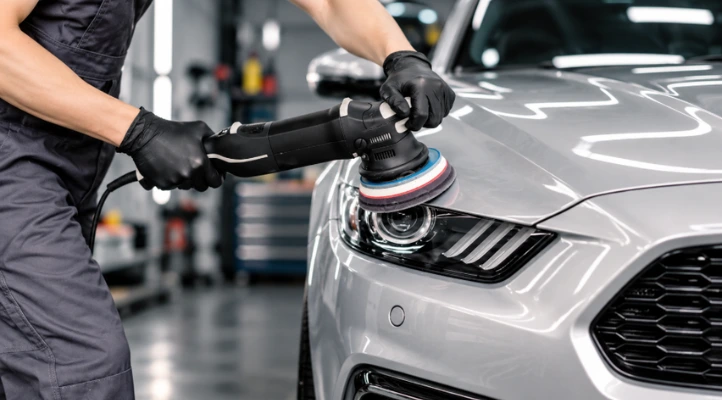
Protect badges, trim, sensor surrounds and film edges where appropriate. Work smaller sections around tight areas and maintain controlled machine speed rather than allowing the pad to run across sensitive components.
For heavier correction, checking paint condition and, where part of your normal process, using a paint thickness gauge can also help you make a more informed decision before reaching for an aggressive combination.
More aggressive isn’t automatically better.
Start with the paint condition and level of correction required, then select the buffing pad, compound or polish to suit.
| Correction job | Pad to consider | Product type | What to consider |
| Light swirls and finishing | Finishing pad | Finishing polish | Suitable where only light correction is required |
| Moderate paint defects | Polishing pad | Polish | Consider before moving to a heavier correction combination |
| Heavier defects on suitable bare paint | Cutting pad | Compound | Check paint condition and surrounding surfaces first |
| Tight workable bumper sections | Smaller pad such as 80 mm | Match to correction required | Provides greater control than a larger pad in confined areas |
We stock 80 mm foam pads in heavy-cut, polishing and finishing options, along with larger pad sizes for broader panels. This gives detailers more flexibility when moving between open areas such as bonnets and doors and tighter workable sections around modern bumpers.
The important point is to match the setup to the surface and correction required rather than using the same aggressive combination across the entire vehicle.
Before polishing a panel, establish whether you’re working on automotive clear coat or PPF.
Don’t assume the compound, polish, pad or machine process used on painted clear coat will automatically suit paint protection film. PPF construction and top coats vary, so check the film manufacturer’s care instructions before attempting correction.
Film edges and seams deserve particular attention. Running a machine pad aggressively across an edge can increase the risk of lifting or damaging the film.
Where PPF is close to an ADAS component or designated sensor area, check the relevant vehicle requirements before proceeding.
Detailing and ADAS diagnosis or calibration are different jobs.
If a vehicle arrives with an ADAS warning, visible sensor damage or evidence that a camera or radar unit has been disturbed, don’t assume cleaning or polishing will solve it.
The Australian ADAS Industry Code advises following vehicle manufacturer procedures where radar sensors have been removed during relevant repair work, including calibration requirements where applicable.
For a professional detailer, the important part is recognising when an issue falls outside cosmetic paint correction rather than attempting to resolve an ADAS fault through polishing.
Pad condition can affect how efficiently and consistently correction progresses.
As compound, polish and removed material build up in a pad, continuing across multiple panels can reduce its effectiveness. A loaded pad can slow the job and may encourage the operator to compensate with additional pressure or product.
Keeping enough cutting, polishing and finishing pads in rotation allows technicians to change loaded pads when required instead of pushing one pad through an entire vehicle.
For busy Perth detailing bays, body shops and dealership preparation teams, having the right pads ready helps technicians move through the cutting, polishing and finishing stages without unnecessary interruptions.
ADAS-equipped vehicles don’t mean paint correction needs to become complicated. They do make the initial inspection more important.
Identify cameras and sensor areas, check for PPF and previous repairs, assess the paint condition and then choose the appropriate working area, buffing pad and polishing product.
If you need more detail on building the correction combination itself, our guide to matching pads, compounds and polishes for paint correction explains how the different parts of a paint correction system work together.
This keeps the process straightforward. First establish where and how you can work around the vehicle, then choose the correction products that suit the job.
Working around ADAS and PPF comes down to good inspection, controlled technique and choosing the right correction products.
Speak with Auto Shield team about the paint correction work you handle, and we’ll help you match suitable buffing pads, compounds and polishes from our range.