Water restrictions or limited water access can make conventional vehicle washing harder, but they do not necessarily mean cleaning has to stop. Waterless, rinseless and low-water car wash systems can help Australian businesses reduce water use while maintaining professional cleaning results, as long as the method suits the vehicle and the conditions.
For car wash businesses, mobile detailers, dealerships, fleets and automotive workshops across Western Australia, this is also about keeping work moving. A vehicle waiting for a wash can hold up a detail, delay a fleet turnaround or leave a dealership car not ready for presentation. With the right car wash supplies on hand, businesses can adapt their cleaning process without relying on a full conventional wash for every vehicle.
The right method depends on how dirty the vehicle is, where you’re working and how much water is available.
| Method | Best suited to | Less suited to |
| Waterless wash | Light dust, fingerprints and display vehicles | Heavy mud, sand and abrasive grit |
| Rinseless wash | Light to moderately dirty vehicles and mobile detailing | Heavily caked contamination |
| Low-water controlled wash | Dirtier vehicles, wheels and lower panels | Locations where wastewater cannot be appropriately managed |
Auto Shield Group supply car wash supplies for professional detailers, dealerships, workshops and other automotive businesses. The aim is to match the cleaning product and process to the job rather than using the same wash method for every vehicle.
Waterless washing is most useful when a vehicle has light surface contamination such as dust, fingerprints or minor road film.
A purpose-made waterless cleaner provides lubrication while dirt is carefully removed with clean microfibre cloths. This makes the method useful for dealership display vehicles, maintenance details and vehicles that don’t require a complete wash.
It isn’t designed to replace conventional washing in every situation. If a vehicle is covered in mud, sand or abrasive grit, that contamination needs to be dealt with using a more suitable cleaning process.
For businesses, knowing when not to use a waterless product is just as important as knowing when to use one. The goal is to save water without compromising the finish.
Rinseless washing fills the gap between waterless cleaning and a conventional wash.
A rinseless solution uses a limited amount of water without requiring a separate full rinse stage. Clean wash media and microfibre towels are then used methodically to remove contamination and dry the vehicle.
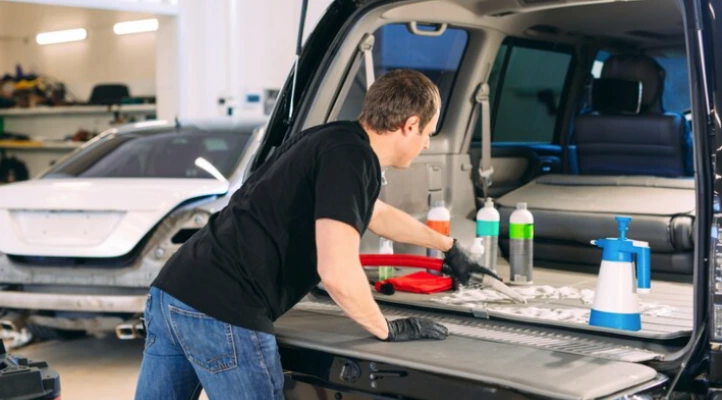
This can be particularly useful for mobile car detailing businesses working at customer locations where access to a tap or wash bay is limited. Carrying suitable cleaning products, clean microfibres, wash media and drying towels gives mobile operators more flexibility when conditions don’t suit a traditional wash.
As with waterless washing, assess the vehicle first. Heavily caked mud or grit may require a different approach.
Some vehicles need more than a waterless or rinseless clean.
For dirtier vehicles, a controlled wash lets you concentrate water and cleaning products where they’re needed most. Car wash shampoo can handle the general clean, while suitable degreasers, pre-cleaners and wheel products can target heavier contamination.
We supply automotive cleaning chemicals for different stages of professional vehicle cleaning, helping businesses build a wash process around the type of vehicles they regularly handle.
Using the right cleaner first time also matters for productivity. Rewashing the same panel uses additional water, chemical and labour and can slow vehicle turnaround during busy periods.
Not every part of a vehicle needs the same cleaning process.
Wheels, tyres, lower panels, bugs, grease and road grime are often more heavily contaminated than upper body panels. Treating these areas separately can reduce the need to repeatedly wash the whole vehicle.
Choose the appropriate pre-cleaner, degreaser or wheel cleaner and follow the product directions for dilution, application and rinsing.
For a professional detailing or car wash business, targeted cleaning isn’t just about conserving water. It can also help control chemical use and staff time while maintaining the cleaning result customers expect.
Low-water cleaning depends on having enough clean wash media available.
For waterless and rinseless jobs, your setup may include:
Trying to stretch one dirty cloth across an entire vehicle can compromise the cleaning process. Rotate clean microfibres as required and keep cloths used on wheels or heavily contaminated areas separate from those used on paint and glass.
We supply microfibre products and detailing consumables alongside our automotive cleaning range, making it easier for businesses to keep the chemicals and accessories needed for low-water cleaning together.
Using less water doesn’t mean using more chemical.
Follow the manufacturer’s instructions for dilution, application, dwell time and rinsing. Overusing concentrate increases product consumption without necessarily improving cleaning performance. Using a product incorrectly can also lead to repeat cleaning.
For busy detailing businesses and automotive operators in Perth, consistent dilution makes chemical usage easier to predict and helps staff follow the same process from one vehicle to the next.
This is particularly useful for higher-volume operations where small amounts of unnecessary product use can add up across multiple vehicles.
Low-water car wash products can help reduce water consumption, but the products themselves don’t determine whether a business meets local water, drainage or wastewater requirements.
Requirements can depend on your location, premises, wash process and how wastewater is managed. Before changing your commercial vehicle-washing setup, check the current Water Corporation guidance for vehicle and machinery wash-down areas.
This is particularly important for Western Australian car wash and detailing businesses changing where vehicles are cleaned, how wash water is handled or how wastewater is discharged.
A water-efficient cleaning process only works when the products behind it are ready to use.
Depending on your operation, regularly check stock of:
Set reorder points for high-use consumables rather than waiting until the last container is empty.
For dealerships, fleets and professional detailers, reliable stock helps protect vehicle turnaround. It also means staff can choose the right cleaning method rather than using an unsuitable product simply because something else has run out.
Reducing water use doesn’t have to mean lowering your cleaning standard. Waterless products can handle suitable light cleaning, rinseless washing gives mobile and fixed-site detailers another reduced-water option, and controlled washing can handle vehicles that need more intensive cleaning.
If water restrictions or limited water access are changing how you clean vehicles, contact us about your car wash supplies. Tell us how you currently wash vehicles and the type of work you handle, and we’ll help you match suitable car wash products and consumables to your setup.